Three interlocking triangles, closely tied to Odin and the dead. But which Norse symbols are truly old – and which are modern inventions?
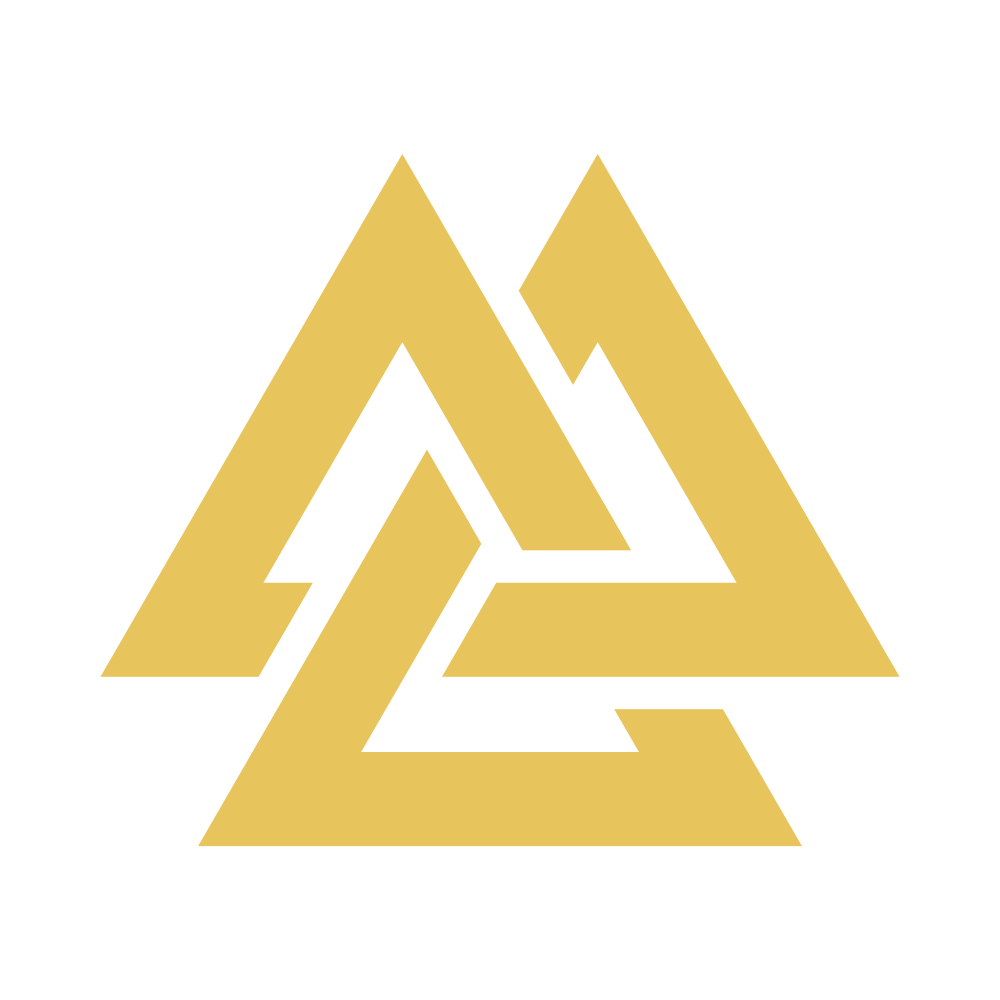
The Valknut – the ‘knot of the fallen’ – is one of the few symbols that is actually attested from the Viking Age. It appears on Gotlandic picture stones such as the Stora Hammars stone and in ship burials, often in scenes connected with sacrifice, death and Odin. Much suggests it was the mark of the god of the hanged and of those fallen in battle.
Genuinely attested are, among others, Thor’s hammer (Mjölnir) – over 1,000 amulets have been found – the Valknut, the runes themselves, and animal motifs such as ravens or wolves. These signs appear on the stones, jewellery and weapons of the period.
Other ‘Viking symbols’ that are hugely popular today are, by contrast, modern: the Vegvísir and the Ægishjálmur (the ‘helm of awe’ in its familiar star shape) come from Icelandic galdrabók manuscripts of the 17th to 19th centuries – that is, from Christian times, long after the Vikings. They are beautiful nonetheless, but they are simply not of the Viking Age.
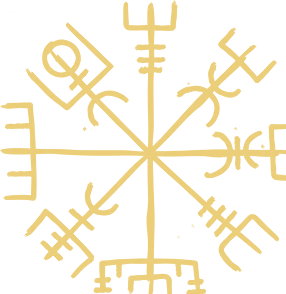 Vegvísir
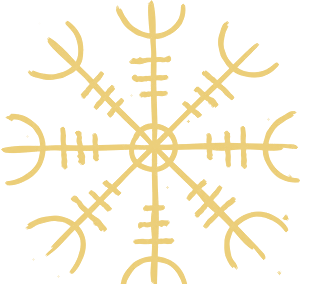 Ægishjálmur
This honesty matters to us. When we engrave a symbol, we are happy to tell you what it means and where it comes from – whether ancient or modern.
“I know that I hung on a wind-rocked tree nine whole nights, wounded with a spear and given to Odin, myself to myself.”Hávamál 138, translation after Henry Adams Bellows (public domain)
Want to get to know the signs yourself? In our Rune Lexicon you will find all 24 runes of the Elder Futhark with their meaning.