Most Vikings were not raiders but farmers, traders and craftspeople. A look inside the long house where their lives took place.
The image of the wild Viking with a horned helmet is a 19th-century myth – born on the opera stage, not in the real North. The vast majority of people in the Viking Age were farmers, craftspeople and traders whose lives revolved around the farm, livestock and the seasons.
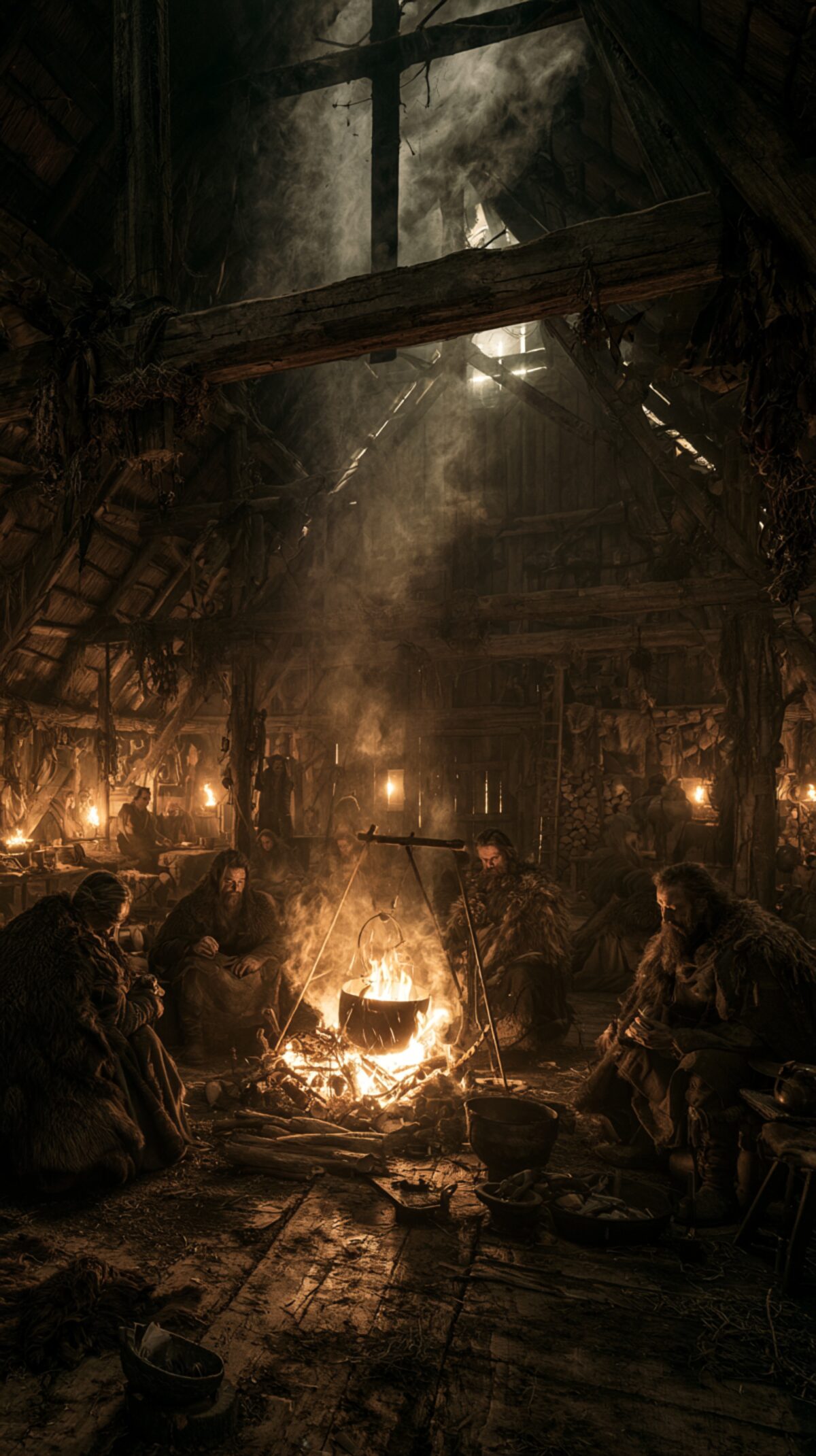
At the centre was the longhouse: a building up to thirty metres long, made of wood, wattle and clay, often roofed with turf. In the middle burned the hearth, whose smoke drew out through an opening in the roof. Here people cooked, ate, wove and slept – and in winter people and livestock often shared the same roof, which provided warmth.
Men ploughed, fished, forged and built ships; women ran the farm, wove, brewed and managed the stores – they held the key to the chest, a mark of their standing. Children helped from an early age. Life was hard, ordered and strongly shaped by the community of the kin.
“He must rise early who has few workers, and go to see to his work himself.”Hávamál 59, translation after Henry Adams Bellows (public domain)
Even in daily life people loved beauty: artfully decorated brooches, carved utensils, engraved pendants. It is exactly this delight in the decorated everyday object that we keep alive in our workshop.